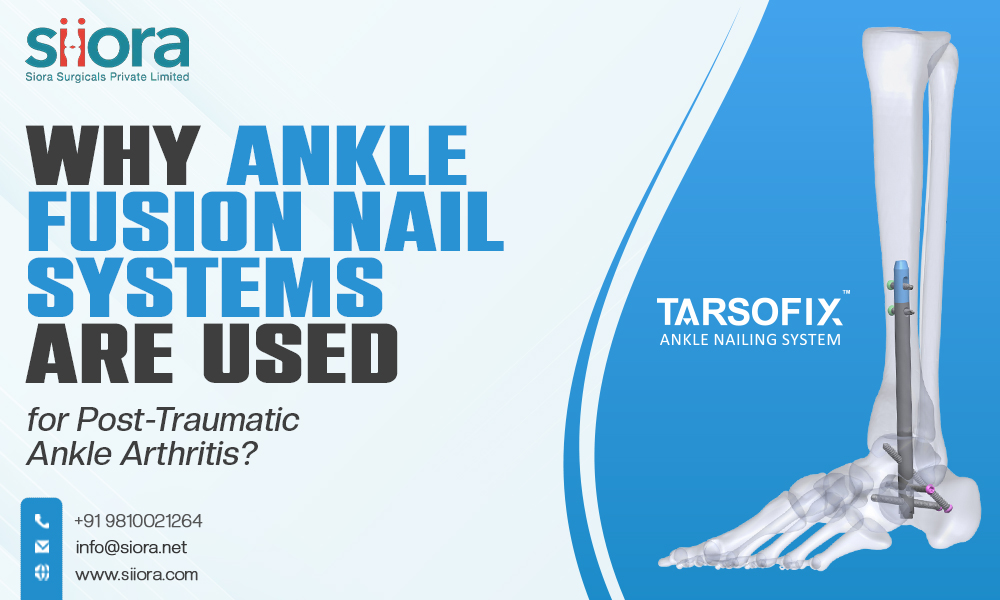
Post-traumatic ankle arthritis hits hard after injuries like fractures, turning everyday steps into a painful ordeal. Many folks dealing with this turn to ankle fusion nail systems as a game-changer, fusing the joint to kill the pain while keeping the foot useful. These nails go right inside the bone for rock-solid support, especially when other fixes fall short.
What Triggers Post-Traumatic Ankle Arthritis?
Picture this: a nasty ankle fracture from a bike crash or sports mishap shreds the cartilage. Over time—sometimes just a few years— that joint wears out fast, especially in younger, active people. Swelling never quits, stairs feel like mountains, and even short walks drain you. Braces and shots help some, but when they don’t, surgery steps in because this arthritis marches quicker than the garden-variety kind from age.
How Ankle Fusion Nails Step Up?
Think of these as sturdy rods slid up from the heel, locking the ankle and hindfoot bones together in what’s called tibiotalocalcaneal fusion. They pack screws that grip tight and feature to squeeze the bones closer as they heal. Unlike plates slapped on the outside, nails share the body’s weight better, standing up to the pounding our legs take daily without snapping or shifting.
Why Pick Nails Over Other Options?
Surgeons love the smaller cuts these allow—no huge gashes means less bleeding, quicker healing, and fewer bugs creeping in. Success rates hover around 90%, beating older methods where bones sometimes refused to knit. Patients hobble less post-op, ditching crutches sooner and getting back to light work faster.
Here’s what sets them apart:
- Nails fight twisting forces like champs, perfect for mangled post-fracture ankles.
- Built-in squeezers keep pressure on until bones merge solidly.
- They handle tricky cases, like weakened bones from diabetes or prior surgeries gone south.
Who Gets Them and What Happens in Surgery?
They’re a lifeline for fit folks whose joints are shot but who aren’t ready for full replacements that might flop. The doctor prepares the joint surfaces—sometimes with a scope for precision—slides the nail home, locks it down, and might toss in some graft for extra glue. Most wake up with instant pain relief, though it takes months for full strength.
Real Results and Everyday Wins
Folks report ditching pain meds and walking steadier, even if the ankle won’t flex anymore. These hold up longer than artificial joints in tough bone conditions, no creeping loose after years. X-rays track the merge, and by six months, many hit the trails again—carefully.
Navigating Recovery Smartly
Start with a boot and no weight, then ease in as X-rays green-light it. Quit smoking, watch blood sugar—these orthopaedic implant nails shine when your body’s primed to heal. Risks stay low, turning a wrecked ankle into one that just works, letting you reclaim hikes or family time without wincing.
 Siora Surgicals Pvt. Ltd.